




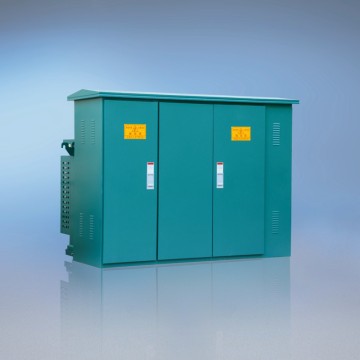
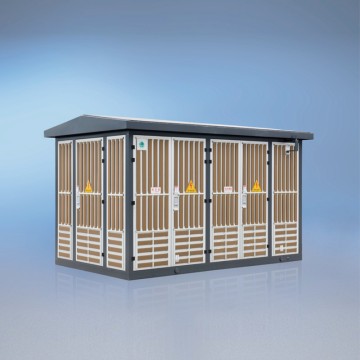
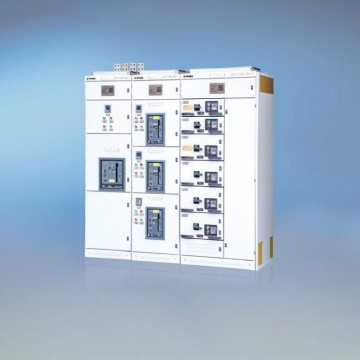
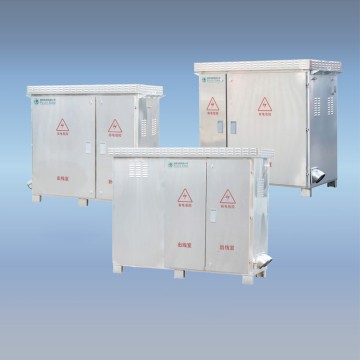



China NY6-12 (V, C, PT) 630-25 Integrated Ring Main Switchgear Suppliers & Factory for Power Distribution
Overview
With the continuous development and progress of society, my country's urban power grid has undergone tremendous changes. Most cities have formed or are forming power load-intensive areas. The previous power supply from the substation 12/24kV line (or branch line) to the direct user end can no longer meet the requirements of urban development, so a new power supply method through switching has emerged.
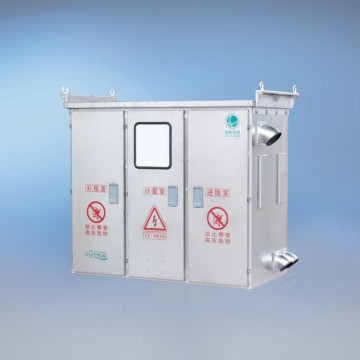
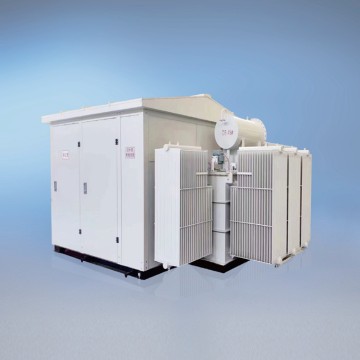
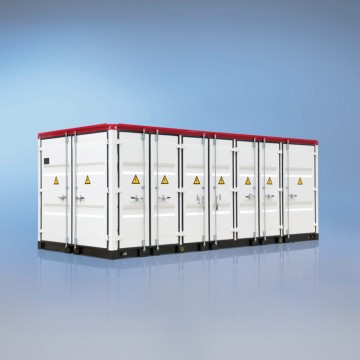
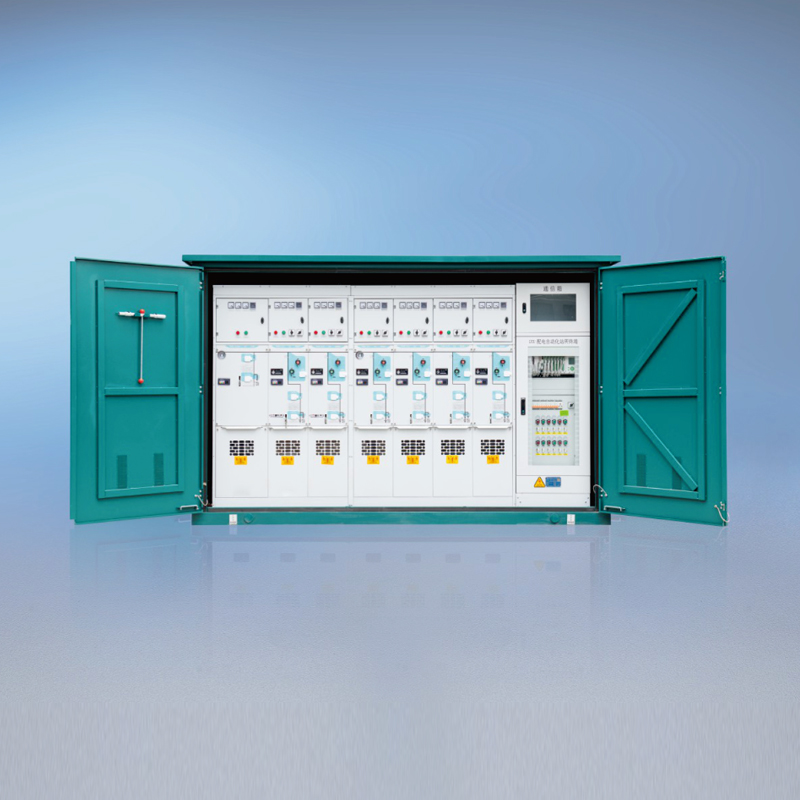
NY6-12 (V, C, PT) /630-25, BD-163 integrated primary and secondary ring network switchgear and station terminals are intelligent complete sets of equipment launched in response to the requirements of the State Grid Standard "Technical Standards for Primary and Secondary Equipment of Power Distribution". They are complete sets of equipment that integrate electromagnetic voltage and current transformers, electric energy metering modules, high-speed fault transient waveforms and other advanced technologies.
It consists of a ring inlet and outlet unit, a feeder unit, a busbar equipment (PT) unit, a centralized DTU and connecting cables. It can collect active power, reactive power, power factor, frequency, zero-sequence current and zero-sequence voltage, and has line loss metering, electric energy metering, line voltage identification, voltage over-limit, load over-limit and other alarm sending, short-circuit fault detection and processing, single-phase grounding fault detection and processing functions, and supports the sending of short-circuit/grounding fault events to meet the needs of distribution network automation.
Key Features
Based on the traditional DTU function, the metering-level distribution line loss collection function is added, the judgment and positioning function of small current grounding fault is optimized, the sampling frequency is increased, and the fault recording is more accurate. The waveform is closer to the real waveform.
Line Loss Collection Function
The distribution line loss collection module is used to realize the interval electric energy collection function, and the electric energy data on the line is measured in real time, including positive and negative active power and four-quadrant reactive power calculation, so as to realize the two-way metering function and support the positioning function.
Small Current Grounding Fault Location
By analyzing and collecting data from phase current transformers and zero-sequence current transformers, the control unit uses a variety of algorithms to identify these characteristic quantities, thereby accurately locating the area where the fault occurs.
High-Frequency Transient Recording
By sampling 128 points per cycle, the waveforms of each channel of the 4 cycles before the fault and the 8 cycles after the fault, as well as remote signal information such as the location, are completely recorded and sent to the main station for analysis of the cause of the fault. The system also supports cyclic storage of 64 fault recordings.
Product Features
- Adapt to the requirements of feeder automation, the controller uses line voltage as the judgment criterion.
- On-site fault handling can be achieved through delayed closing and substation protection. It does not require batteries, does not rely on communications and master stations, and can achieve complete feeder automation terminal functions.
- The design eliminates the possibility of system instability caused by components that require maintenance, such as batteries.
- The distribution network automation system has clear functions and is easy to operate.
- Use frequently operated load switches/circuit breakers to meet the requirements of automatic and economical operation of power distribution network.
- Use SF6 pole-mounted circuit breakers or vacuum circuit breakers to achieve SF6 arc extinguishing or insulation.
- Three-phase box-type layout, cast or pressed cable outlet, fully sealed structure, military-grade aviation interface, and overall fully sealed technology guarantee, making the product highly weather-resistant, with good anti-condensation performance, and maintenance-free for at least 15 years.
- Reliable sealing performance, IP67 protection level, mature shell sealing technology, one-step molding technology of tooling mold, high mechanical strength, good box airtightness.
- Built-in isolation fracture and vacuum interrupter are connected in series with asynchronous linkage, with good switch opening and closing capabilities and strong safety.
- It has maintenance-free characteristics. The main circuit, secondary circuit and operating mechanism of the load switch/pole-mounted circuit breaker are all sealed in SF6 gas, which is not affected by the external environment. The performance is stable, reliable and maintenance-free.